







Shifting political power dynamics, anti-civil society measures by the government, societal tensions reaching a boiling point – and corruption! Even in its 18th year, K-Monitor's team had no shortage of work. We monitored the use of public funds and the legislation serving government interests, filed lawsuits to uncover hidden information, deployed digital tools to support democratic participation, and made political processes more understandable and transparent. Here is a summary of K-Monitor's work in 2025.

K-Monitor wishes you a Happy New Year!
In 2025, K-Monitor once again took multi-level action against the misuse of public funds, systemic corruption, and the lack of transparency. In the field of public procurement, we exposed the distorted operation of central procurement processes and strengthened legal action with new tools: Through successful motions for revision, crime reports, and lawsuits, we compelled genuine investigations, enforced the disclosure of information of public interest, and we also began policy work on asset recovery. We actively participated in EU level and domestic anti-corruption forums, consistently highlighting rule-of-law and accountability deficiencies. Together with our CSO partners, we produced reports to reveal what the government would rather keep hidden. At the local level, we worked to strengthen municipal transparency and public participation through audits, training sessions, and concrete policy proposals. We also developed our digital tools – Partimap, KÖKÖ, Voksmonitor, Figyusz, and the "This is the Minimum!" program – to support comprehensible, data-driven civic engagement both domestically and internationally. All of this was complemented by research, new partnerships, and strong media outreach to ensure that democratic control could function effectively in practice.
2025 in Numbers:
- We had nearly 500,000 visitors to our public funds and corruption database
- We submitted 50 freedom of information requests and conducted 12 FOI lawsuits against secretive state bodies. In these cases we also represented journalists and other civil society organizations
- We filed 4 motions for revision in criminal cases, made 2 criminal complaints, and initiated 1 legality oversight procedure
- 35,000 people shared their opinion through Partimap questionnaires in various municipalities and by the Budapest Transport Centre (BKK), the tool was even used in Denmark
- K-Monitor had over 300 media appearances related to our cases and topics
Public Procurement Control
Last year, K-Monitor paid special attention to the systemic issues in central procurement. Using FOI requests, we thoroughly uncovered and outlined how the National Communications Office conducted overpriced mega-tenders on event organization and communications, and how billions of euros in public funds flowed to the interests of Gyula Balásy, who was responsible for the organization of the government’s fearmongering campaigns (Lounge Group, New Land Media) and propaganda activities.
By analyzing the Balásy contracts, we also showed how the government outsourced political communication and ideology production to actors that are independent on paper, but in reality existentially dependent on government support. For instance, the Center for Fundamental Rights (Alapjogokért Központ), a Fidesz-allied think tank, paid millions of euros to the Lounge Group this year for creating, for example, the CPAC Hungary conference or a refugee-fearmongering campaign, but we also found bizarre procurements in which indirect state funding went to branded secret-socks, inflatable pool rings, and sunscreen.
We also dealt separately with healthcare procurement: in our research conducted with the Government Transparency Institute, we demonstrated that single-provider competition alone is insufficient to address the corruption risks in this sector. Based on data analysis, we identified systemic problems combining multiple factors as well as high-risk actors.

Antal Rogán and Gyula Balásy
Piloting New Tools Against Corruption
This year, K-Monitor also tested new approaches in its anti-corruption litigation. As part of this endeavor, we filed motions for revision in three cases involving government-aligned companies, challenging decisions that had either closed investigations or dismissed criminal reports. The prosecutor's office and the court reviewing the motions found our arguments well-founded in all three cases, in the case of Waberer's Group (a cargo company owned by Viktor Orbán’s son-in-law) due to missing fundamental investigative actions and the persistence of criminal suspicion, in the Veszprém Handball Team Zrt. case (which involved the unfinished renovation of a municipal camping grounds at the time when a prominent Fidesz leader was the mayor) due to incomplete fact-finding, and in the case of construction company Tömb 2002 Kft. (the company that basically never lost a public procurement tender), due to incomplete and non-individualized reasoning, they annulled the investigating authority's decision. The latter case was also covered by Átlátszó in a video report that generated significant public attention.

Ágota Szentes talks about the Tömb 2002 Ltd. case for Átlászó.hu
We also strengthened our criminal law approach by filing reports, including a report concerning previously uninvestigated abuses related to the management of the Hungarian National Bank and its foundations and Schadl-Völner case (involving a deputy minister and the head of the bailiff chamber and probably other high ranking officials). For abuse of office, we even filed a report against former prosecutor general and Fidesz loyalist Péter Polt, who had been ushered from the Chief Prosecutor's seat to the Constitutional Court. In this latter case, the investigating authority declared the case statute-barred through an unlawful interpretation of the law. Besides Polt's political and prosecutorial record, we also presented a detailed blog post tracing “Minister of Propaganda”, Antal Rogán's career trajectory, including how he has so far avoided being held accountable thanks to Polt.
Although the justice system has so far remained reluctant to investigate cases affecting government circles, we still considered it important to begin addressing the issue of asset recovery. One of the main rationales behind criminal proceedings, after all, should be to ensure that assets obtained through corruption are returned to society; accordingly, we launched a blog series on the topic, also laying the groundwork for future policy recommendations. We also gave interviews about our positions on the emerging questions, while Partizán devoted an in-depth discussion to the possibilities of anti-corruption action, with our ED’s participation.

Photo credit: MTI
Next year, we will continue testing criminal procedure tools and we plan to support other actors in the civil sector by sharing best practices for filing motions. Our policy recommendations will be summarised in recommendations for reforms to the criminal procedure made widely available to both professionals and the public.
Committee Work
As in previous years, we also participated this year in the public consultation on the EU’s annual rule of law report. In our joint expert submission with other civil society organizations, we highlighted, among other issues, systemic corruption problems in Hungary, from the lack of transparency in campaign financing, through deficiencies in the asset declaration system, to the limited powers of the Integrity Authority. The European Commission's July report largely confirmed our concerns: they found that Hungary made no substantial progress regarding the reform of lobbying rules, the curbing of the "revolving door" phenomenon, or the strengthening of asset declaration controls. The Commission – in line with the experiences of civil society – also noted a lack of tangible results in the investigation of high-level corruption.
In 2025 we continued our work in the EU-initiated Anti-Corruption Task Force; however, the government and civil society sides failed to reach a consensus on the content of the 2024 annual report by the deadline. Our differences were fundamental: we disagreed on the severity of domestic corruption and the need to name specific cases. After unsuccessful negotiations, K-Monitor, together with the other CSO delegates, exercised the legal option to publish the CSOs’ original draft as an independent shadow report, also containing professional critiques and references to specific cases. To prevent similar deadlocks in the future, the Anti-Corruption Working Group developed and adopted a new procedural and working framework last autumn.
In addition to the Anti-Corruption Working Group, formal cooperation with government bodies on the oversight of public spending also took place within two further platforms: the Recovery Plan and the Territorial and Settlement Development Operational Program (TOP) Plus monitoring committees. In the latter, three in-person meetings and two written voting procedures were held in 2025: early in the year, after the mid-term review, the government submitted an amendment to the program to the European Commission with the monitoring committee majority’s approval, which was approved only in mid-December. K-Monitor and others criticised the amendment for failing to reflect adequately the socio-economic changes and current challenges since 2021, merely recording the loss of funds at the end of 2024 with only minimal adjustments to priorities. Partly in response to civil society concerns, the amendment finally approved by the European Commission strengthened areas such as the eligibility of housing agencies for support and the level of social urban rehabilitation support.
Throughout last year, the question of whether the municipality of Budapest would finally gain access to EU funds remained a recurring question. While there appeared to be progress with the signing of two grant agreements, actual implementation continued to be blocked by the investment law enabling the involvement of the Ministry of Construction and Transport, as well as by the government’s failure to launch further Budapest-related calls – despite nearly a year and a half of promises and the mutual acceptance of compromise conditions. Despite constructive proposals, no meaningful improvement was made in the 2026 communication action plan either. The negative atmosphere of the TOP Plus meetings was further exacerbated by the draft legislation targeting civil society that receives foreign funding (which was ultimately not adopted), as well as by the visibly frustrating fact for all participants that the government made no attempt to meet the milestones it had committed to under the conditionality procedure. As a result, the loss of funds at the end of 2025 became unavoidable, and this was already anticipated by the government over the course of the year.
More constructive work took place in the TOP Plus Territorial Selection System (TKR) subcommittee, where the project selection procedures of the counties and major cities could be discussed allowing members to share experiences across multiple rounds. Building on these experiences, K-Monitor was able to engage meaningfully in 2025: we observed 12 decision-preparation committee (DEB) meetings across 8 counties, where counties and ministry representatives voted on applications related to local economic development, tourism, social urban rehabilitation, blue-green municipal infrastructure, and various human infrastructure. In parallel with the above, several evaluations were launched, among which K-Monitor participates more deeply in the assessment of the territorial selection system. In this context, we reviewed the initial questionnaire, and subsequently the inception report prepared by the commissioned evaluators, and later contributed to sharing the experiences gained at the above-mentioned DEB meetings through interviews. The publication of the first phase of the evaluation is expected to provide a thorough overview of the shortcomings of the project selection system.
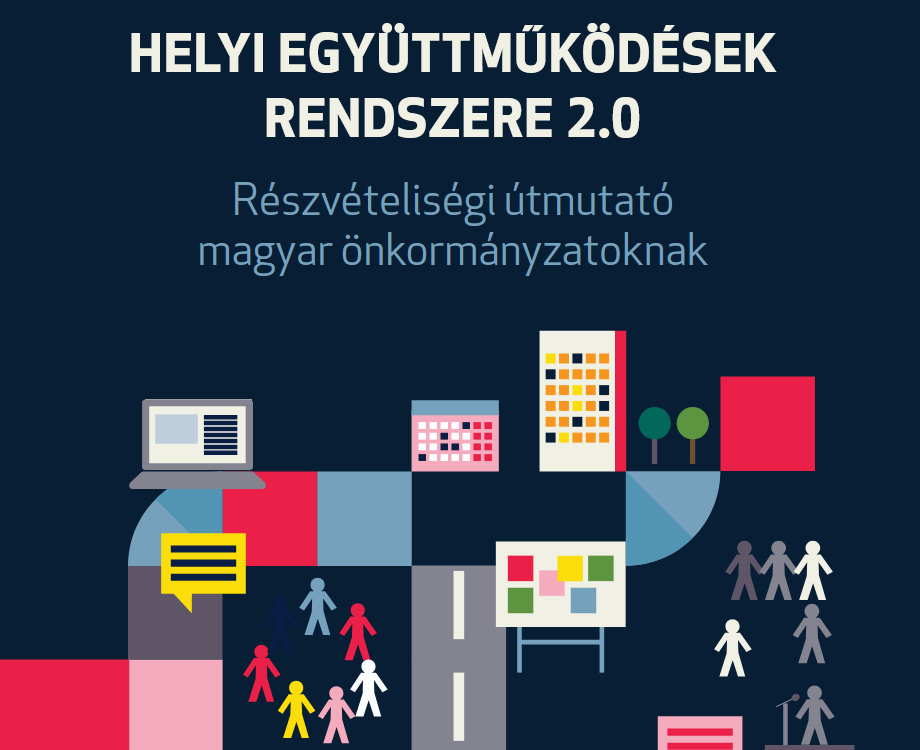
Local Cooperation System 2.0 – Participation Guide for Hungarian Municipalities
Transparent Municipalities
After the 2024 countrywide audit, 2025 was primarily a year of background work for the “This Is the Minimum!” transparency program. Together with our partners, we began updating the criteria framework used for program assessment. We also partly summarized the experience gathered over the years in a study, which, although emphasizing lessons learned in measuring transparency, also evaluates the entire 2019–2024 cycle in terms of the development of municipal transparency, starting from the 2019 local election campaign. Over the summer, we began rebuilding the website, which will now make not only the content of the programme but also detailed and interactive assessments of municipalities available. From the summary table and the individual data sheets, it will be possible to see to what extent a given municipality complies with each minimum criterion and its sub-criteria. The municipal ranking table will be expanded to show changes compared to previous positions, and the assessments will also be comparable with average values. The website will also feature related news from partner organizations. In the coming year, we aim to continue the redevelopment by adding additional subpages and a search function.
We continued the training sessions that have become regular in recent years. At the invitation of the Civil College Foundation, we held a training session early in the year for CSOs from smaller municipalities and newly elected municipal representatives, covering the content and evaluation methodology of "This is the Minimum!". Later, at the summer countrywide meeting, we facilitated a joint reflection with activists focusing on how the demand for transparency appears from a local perspective and how our transparency program could be further strengthened. We also held – for the second time – a training session for municipal representatives at the Turbo Municipal Conference on transparency best practices.
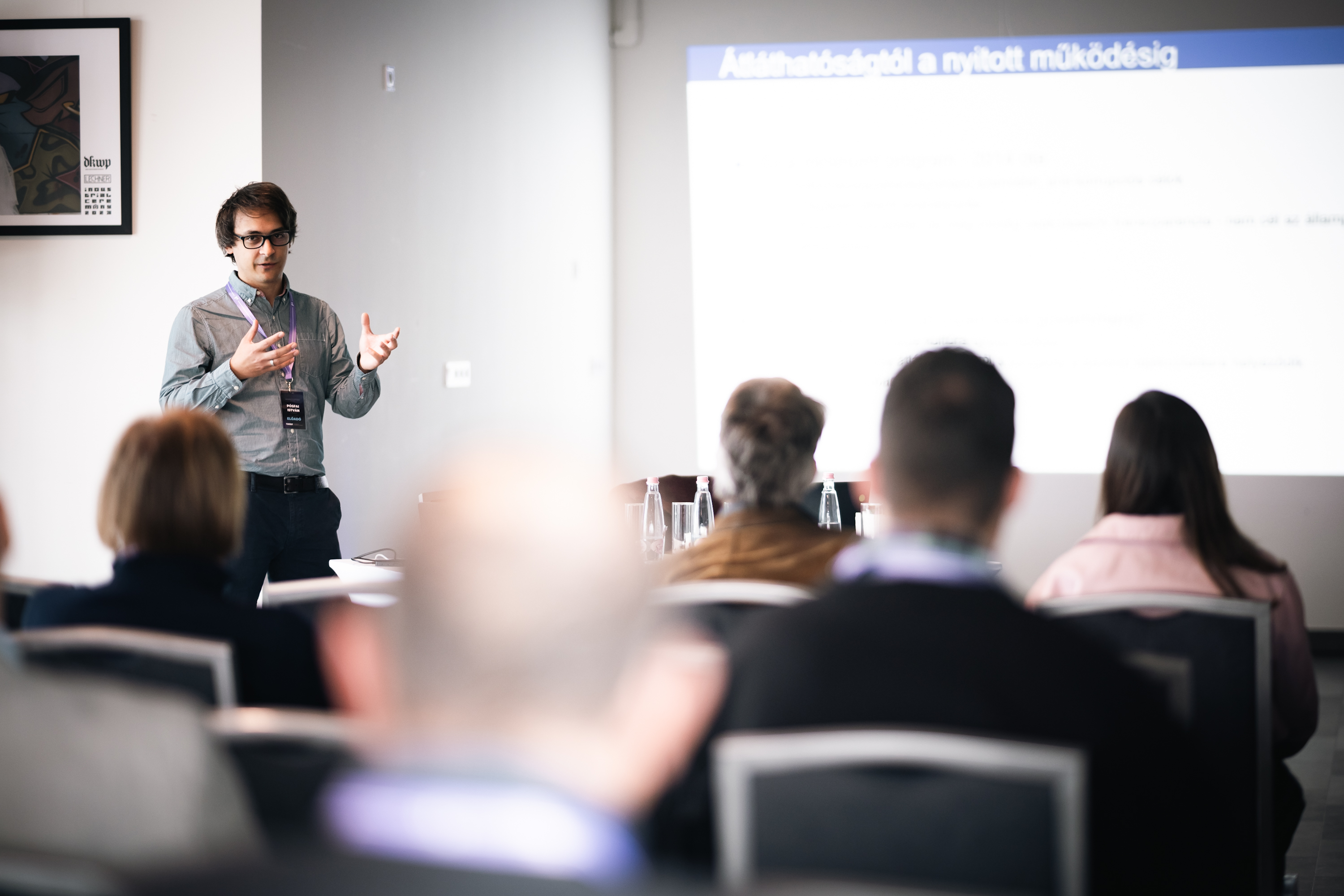
István Pósfai’s presentation on municipal transparency
We provided targeted advice on transparency in specific cases: after many years of promises, the Budapest City Assembly adopted a transparency decree, in the preparation of which K-Monitor took part, and we also provided comments on the draft regulation. Although the adopted decree comes into force gradually, several provisions have already been implemented, and since then, additional transparency initiatives have appeared on the city’s agenda, including a proposal on the uniform publication of contracts by metropolitan institutions, which we also briefly reviewed. As an active member of the Open Budapest working group, we contributed to the impact assessment of the Participatory Budget, which we also reviewed publicly after its completion. Together with several other civil society organizations, we also advocated for the continuation of Participatory Budgeting – unfortunately without much success, as reflected in the adoption of the 2026 Budapest budget.
In addition to participatory budgeting, after six years we published the second edition of the System of Local Cooperation, which we presented alongside a reenactment of a roundtable discussion held six years earlier. Rather than focusing on international participation examples, the publication synthesized domestic experience accumulated since the 2019 participation turnaround, thereby supporting the dissemination of well-functioning models. We also reached out to mayors who had embraced open governance as a central theme of their 2024 election campaigns on the anniversary of their electoral victories, inviting them to report on the progress made in fulfilling their commitments.
In addition, we concluded our “We Monitor Together! – From Data to Story, from Story to Public Issue” project in 2025. The project aimed to support local civil society organizations in strengthening their advocacy capacities through practical tools, in a municipal environment that is often difficult to navigate and largely unreceptive to cooperation. During the 18-month cooperative work, we collaborated with five local CSOs on how to articulate local problems through data, and how to transform data into clear, media-ready narratives capable of elevating these issues into matters of public concern. As the closing output of the project, we published the study “WE MONITOR TOGETHER! – From Data to Story, from Story to Public Issue”, which presents the methods we used across ten chapters, from access to public information requests and budget analysis through community engagement and mapping to rethinking participatory processes, illustrating – through concrete examples – the full trajectory of individual cases from data collection to public visibility.
On our blog, we published detailed articles on the key stages and highlights of the joint work carried out with partner organizations, providing context for the study:
- In our post Beyond questionnaires: on-site mapping with PartiMap, we presented a new way of using the PartiMap application to conduct on-site mapping. The article describes, among other things, how we collected data with the involvement of volunteers to map Debrecen’s Piac Street, complemented by social media monitoring and data visualisation techniques.
- Our post Test Application Multiple Ways – Part 2: Transportation Test 2040. Using Future Visions in Participatory Processes presented the use of transportation-related future visions and participatory methods application through our Voksmonitor application, which we employed to strengthen local community dialogue.
- In our post Test Application Multiple Ways – Part 1: Creating a Local Voksmonitor, we detailed the local-level use of our Voksmonitor tool, which allows residents to compare their positions on local policy issues with those of the candidates, enabling more informed decision-making in the election.
- In our post Civil Communication Reloaded! – Tools and Ideas for CSOs to Amplify Their Messages, we provide practical tips on how civil society organizations can make their messaging more effective and reach a wider audience through their communications.
- Our blog post How Does a PartiMap Project Work? Step-by-Step Community Mapping outlines the steps of a PartiMap-based mapping survey project, using the examples of Gárdony and Veresegyház to illustrate the process from data collection to community mapping.
Transparent Governance
Ensuring transparency in decisions related to public funds, unlike criminal procedure tools, primarily aims at prevention, and is crucial for the social oversight of policy practices, the meaningful functioning of the media, and the creation of conditions for citizens’ freedom of expression.
In 2025 as well, we addressed asset declarations on numerous occasions. We had dozens of declarations from government leaders corrected because they were initially unable to complete their income statements in accordance with the rules. We also pointed out that even the Prime Minister struggled with this, and that Viktor Orbán even failed to indicate in his asset declaration that he exercises the founding rights of the Felcsút Youth Training Foundation. Of course, this did not seem to concern the Immunity Committee, responsible for overseeing asset declarations.

Not only did he omit Hatvanpuszta from his asset declaration, but the Prime Minister also failed to correctly fill in his legally held positions.
In addition to four ongoing lawsuits initiated in 2024, we filed four new lawsuits in 2025 to ensure that people could access information that state bodies sought to withhold.
Thanks to our litigation, the reports of the President of the Government Audit Office (KEHI) to Minister Antal Rogán between 2021 and 2023 were revealed. The reports were processed by Csaba Segesvári, a journalist at Átlátszó: while the Audit Office omitted the problems at the Student Loan Centre previously lead by Peter Magyar, leader of the opposition from its materials, it uncovered issues in child protection – which, of course, the government remained deeply silent about.
In spring 2025, we lost our lawsuit against the Ministry of Interior before the Constitutional Court, meaning that the confidential healthcare reorganization study prepared for millions of euros by Boston Consulting Group (BCG) did not need to be disclosed. Nevertheless, the report was later leaked to independent media outlet HVG in March 2026, revealing that most drastic changes detailed in the study, including the closure of numerous healthcare facilities and the centralization of medical service coordination, were overruled by the government due to political reasons.
In 2025, we also devoted significant attention to the growing lack of transparency around who actually works for the government. After not a single ministry was willing to disclose who advises government bodies, we filed lawsuits simultaneously against nine ministries. We won the case at first and second instance, and again before the Supreme Court in the summer of 2025. However, the ministries initiated a legal uniformity complaint procedure against the Curia’s ruling. In the procedure led by Curia President András Varga Zs., it was decided that the names of political advisers must not be made public until the Curia rules on the ministries’ complaints.
Thanks to our litigation efforts, the National Directorate General for Hospitals (OKFŐ), operating under the authority of the Minister of Interior, is now required to disclose how it selected the hospital directors, what professional career paths the appointed leaders have followed, and what concepts they submitted as part of their applications. These pieces of information had in fact not yet been made publicly accessible in the vast majority of Hungarian hospitals.
Although in response to our successful litigation, the government amended the regulation governing access to cabinet meeting records, and even sued us in return – unsuccessfully –, we are not letting go of the case concerning the 2009 cabinet meeting materials we had already won. We are pursuing enforcement proceedings against the Prime Minister’s Cabinet Office, initiated because the Office has refused to disclose the annexes to the minutes of the Bajnai government’s cabinet meetings despite a final court ruling. Moreover, we launched a new lawsuit against the Cabinet Office, as the administrative body operating under Minister Antal Rogán has refused even to disclose the titles of those government decisions that contain classified information labeled as “state secrets.” A partial success of our activities can be considered that both topics have made it into the election program of the opposition TISZA party.
Compared to our previous work, a new development in 2025 is that K-Monitor no longer fights for transparency solely through its own data requests, but also assists journalists and civil society organizations in obtaining the data they need for reporting or policy-making purposes. With K-Monitor’s assistance, economist Balázs Romhányi, a researcher at the Fiscal Responsibility Institute Budapest, won a lawsuit against the Hungarian State Treasury for pension disbursement data for the third time. The Közlekedő Tömeg Association, again with K-Monitor’s support, won a case against the Hungarian State Railways (MÁV), enabling the Association to investigate whether certain railway lines are being slowed down based on actual data. Although Fidesz-ideologue Mária Schmidt threatened the newspaper Magyar Hang with the Sovereignty Protection Office in response to a data request, her foundation ultimately agreed in court to release information related to the establishment of the Puskás Museum. This allowed Magyar Hang – with our help – to publish a series of articles on the public spending of the museum. And the case of the public money-grabbing museum was not the only one in which we supported Magyar Hang: with K-Monitor’s assistance, the newspaper also won a lawsuit against Bethlen Gábor Fund Management Zrt., which distributes football subsidies beyond Hungary’s borders. We are also representing Radio Free Europe in its lawsuit against the Hungarian Energy and Public Utility Regulatory Authority.
In light of all this, we also assessed the key findings of the National Authority for Data Protection and Freedom of Information’s report on experiences with freedom of information requests.

Noémi Fanni Molnár, K-Monitor’s attorney
In addition to coordinating the work on access to public availability of FOI data, K-Monitor’s advocate, Noémi Fanni Molnár, conducted research at the Institute of Public Law at Goethe University Frankfurt as part of the re:constitution fellowship program, focusing on the practices of the German Federal Constitutional Court regarding evidence, particularly empirical data.
Our digital tools in 2025
Partimap
Partimap is our interactive, map-based tool supporting community planning and participatory decision-making, which we continued to develop extensively in 2025. On the questionnaire-based worksheets, we introduced movable questions and easier question editing. For map-based worksheets, we expanded fixed zoom and kml parameters. We also introduced a quiz mode, created a German-language interface, and enhanced embedding options. For those interested in the details, read our blog post on the topic. We also published a data analysis guide that allows users to analyze xlsx output in Excel without the need for specialized data analysis software. We wrote more about it here.
In addition to numerous bug fixes, we expanded our map-based survey system with many exciting new features. We enabled multi-line text responses, manual and randomized reordering of answer options, and improved conditional question display. On the map, action areas can now be selected, questions can be moved between worksheets, and surveys can be transferred to other users. We also developed an interactive preview for embedding the surveys. We incorporated aggregated responses and worksheet completion times into the report. With the introduction of a German-language interface this year, the user interface is now available in five languages. Our plans for next year include enabling the display of the current GPS position, exploring new question types, and improving the responsiveness of the interface.
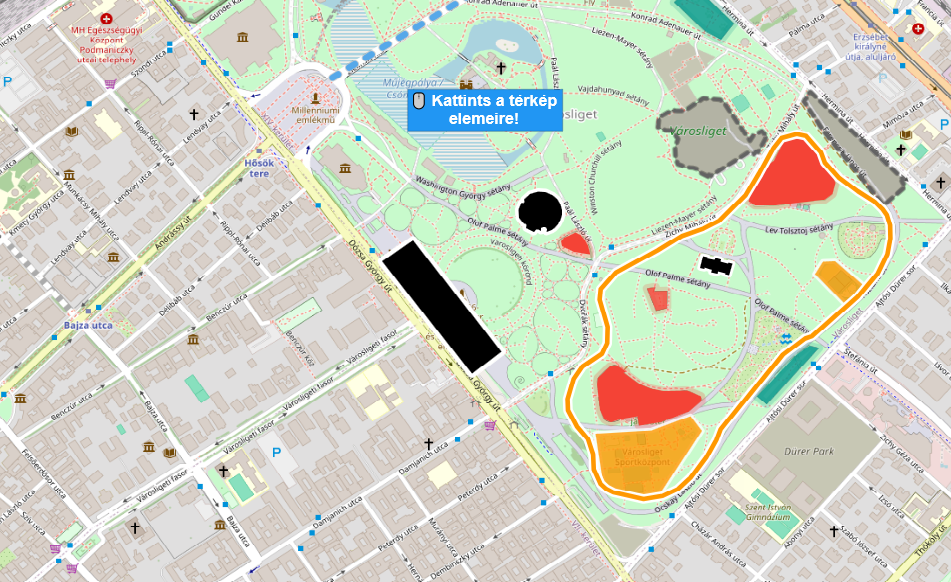
In 2025, Partimap was used by a total of 56,000 visitors, of whom 22,776 completed at least one survey. Over the year, 364 new surveys were launched on the platform. The surveys were accessed not only from Hungary but also from numerous other countries, demonstrating Partimap’s international usability. The most visited survey was the BKK Night Network, with 75,000 views and 6,638 completions, followed by a Danish survey, aimed at mapping unsafe or insecure locations. Significant interest was also shown in “Transport in Nyíregyháza and its surroundings”, the Spanish Santander’s “Green Infrastructure Plan for the Natural Capital”, and the BKK survey on the “Pedestrian and Accessibility Strategy”.
KÖKÖ
Using our Comprehensible Budget (KÖKÖ) application, several municipalities once again visualized their budgets in 2025. Józsefváros (Budapest, District VIII) and Terézváros (Budapest, District VI) have been using the platform consistently for years, and in Érd, former municipal representative Imre Balla once again prepared the 2025 version. We also welcomed returning users in Újpest (Budapest, District IV) and Újbuda (Budapest, District XI): Újpest visualized the 2024–25 budgets using our application, while Újbuda prepared visualizations going back as far as 2020. K-Monitor played a more active role in creating the Terézváros and Újpest KÖKÖs, and work is currently underway on the Zugló (Budapest, District XIV) version as well.
Alongside this year’s budget visualizations, we also began a comprehensive renewal of the KÖKÖ application, aiming to release its third iteration after the second version launched in 2020. Over the summer, we began the needs-assessment process by evaluating earlier feedback surveys, studying international examples, and – most importantly – conducting dozens of interviews: we engaged with practitioners and decision-makers in municipal finance, as well as data visualization experts, to collaboratively explore possible directions for developing the tool. In September, we held a workshop with municipal representatives, financial leaders and staff, as well as actors working in cabinets and communications, to discuss how the application could be improved and made more comprehensible based on their experiences. Behind the scenes, we updated the framework to allow for smoother implementation of future developments. We also began building a new administration interface to make KÖKÖ easier to implement for as many municipalities as possible, with minimal effort.
Voksmonitor
Voksmonitor is a joint project of K-Monitor and KohoVolit.eu, which compares users’ views with party programs or representatives’ voting behavior. The 2025 edition is special because, instead of helping voters decide before an election, it helps users navigate actual decisions and expressed positions, this time focusing on the Budapest City Assembly.
The questionnaire covers 28 urban policy issues discussed between October 2024 and May 2025, ranging from transport and housing to green spaces and urban development. Each question is accompanied by a short summary, and respondents can indicate which topics matter most to them. The results are indicative rather than definitive: they show which representatives and political groups are closest to the respondent’s values, while also helping users understand how the Assembly works and how different actors shape the future of Budapest. Would you like to try our application? You can do so by clicking this link.
Figyusz
We continued developing Figyusz, our email-based alert system, expanding the automatically monitored databases to include content published in the document repository of kormany.hu and the submissions on parlament.hu. These sources were complemented with additional filters that help narrow down results by data source categories. We also unified the keyword filtering system, which now supports subscriptions to multiple keywords at once and displays the contextual relevance of search results.
Other projects
We launched several new projects this year, two of them in partnership with the Hungarian Civil Liberties Union (TASZ). With the support of the Allianz Foundation, we are working at both Hungarian and European levels on rethinking and strengthening the frameworks of freedom of information and the right to access information at a time when efforts to undermine transparency are intensifying. With the support of the Civitates Foundation, we are also examining how the EU’s digital regulatory framework is being implemented in Hungary, which we see as an important tool for overseeing tech companies and rapidly spreading new technologies.
In addition, in cooperation with the Hungarian Medical Chamber (MOK), K-Monitor is conducting research into doctors’ experiences related to perceived corruption. The aim is to gain a comprehensive understanding of doctors’ everyday experiences and views on how the healthcare system functions. We are exploring how doctors assess the system’s strengths and weaknesses, which factors influence their professional satisfaction and well-being, how they perceive transparency and decision-making processes, as well as how they perceive phenomena that may hinder effective and fair operation. The project may contribute to a more transparent, fair, and efficient functioning of the healthcare system. The research is currently in its pilot phase, with data collection starting in January, and the results will be published jointly with MOK. Following the survey, we will also conduct qualitative research to explore doctors’ comprehensive views on transparency and malpractice in the system.
Another healthcare-related activity involved analyzing data on financial support provided by pharmaceutical companies, highlighting the lack of transparency inherent in the self-reporting system.
K-Monitor in the Public Eye
Last year, several stories reached the public thanks to K-Monitor. We were the first to report that nearly the entire body of work of famed Hungarian architect Imre Makovecz was being declared a protected heritage, and we also spotted that the government once again provided support for a select group of exclusive civil society organizations through the Rural Civil Fund. A K-Monitor data request revealed who had lobbied on healthcare issues at the Ministry of Interior, and we were also the first to report the salaries enjoyed by government leaders in 2024. We repeatedly covered the sale of public assets (downtown property sales), and even on the gifting of assets in connection with new beneficiaries of the castle program. The press learned from us that the Balásy empire received around 660 thousand euros for just a few days of work organizing Tranzit, a right-wing political festival, and that the Ministry of Foreign Affairs and Trade granted record-level support to Samsung through an individual government decision.

Stefánia Kapronczay, Sándor Léderer, and Zuzanna Rudzinska-Bluszcz with President Barack Obama
You may have come across us several times in the Hungarian and international media around some exciting issues. In the spring, MSNBC interviewed K-Monitor’s director, and in October he had a conversation with former US President Barack Obama.
Behind the scenes
All of this would not have been possible without the contributions of our staff, interns, numerous volunteers, and the support of our donors and followers. In 2025, K-Monitor operated with 11 staff members, on a budget of approximately 330 thousand euros. We received approximately 14 thousand euros in micro donations and 1% tax contributions, for which we hereby once again express our gratitude. Following our successful lawsuits, various state institutions paid us around 4000 euros, and we earned approximately 7000 euros from commissioned work. Our main supporters in 2025 included the Sigrid Rausing Trust, Civitates, the European AI and Society Fund, the Allianz Foundation, the GMF, and the Dutch Ministry of Foreign Affairs.
K-Monitor’s mission remains to strengthen the institutional, legal, and societal frameworks for anti-corruption action at EU, national, and local levels. Through policy analyses and recommendations, we contribute to the protection of the remaining elements of the rule of law; through our legal advocacy and freedom-of-information litigation, we enforce compliance with the basic rules of transparent governance, while also supporting other civil society organizations and journalists in building the capacities they need to do the same. At the same time, we continue to strengthen activities that operate at the local level in the interest of local communities. Our goal is to support citizen participation in decision-making and to contribute to the development and advancement of practical, values-based governance: we believe that through our work, we help foster democratic renewal in Hungary, ensure effective oversight of those in power, and promote the transparent and fair use of shared resources and public goods. We carry out our work through continuous development of our digital tools, data-driven methods, and a proactive approach. In 2026, Hungary will hold elections, which represent both an opportunity and a responsibility for every citizen to reflect on the direction they envision for the country’s future. As a civil society organization, we will monitor public funds flowing into the campaign and support provided by third parties. We will also work to ensure that, alongside the clashes between political camps, there is space for genuine policy debates that we hope will hold Hungary’s next government more accountable.
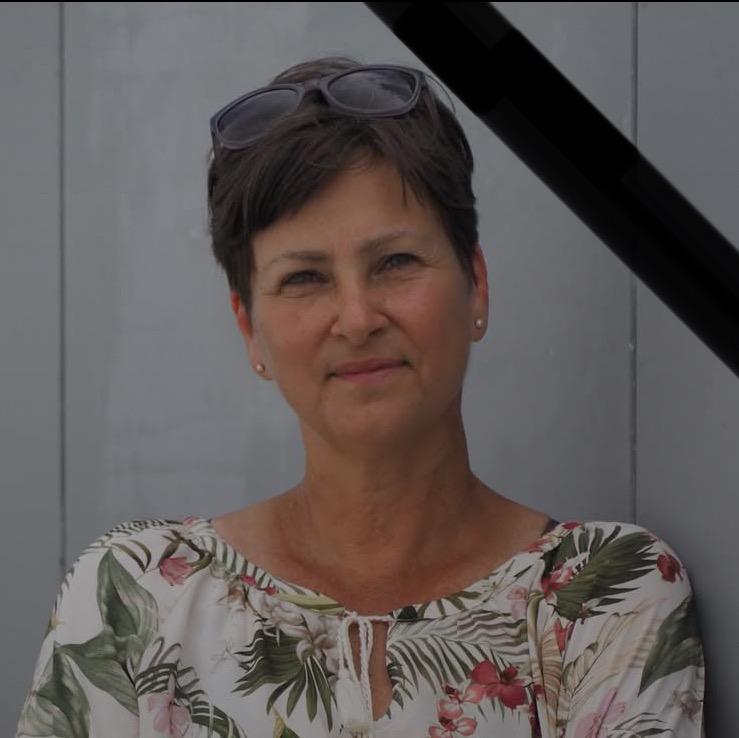
This year brought the greatest loss in our organization’s history: our finance colleague Réka Takács passed away in December. We are deeply grateful to her for ensuring the smooth handling of K-Monitor’s administrative matters over the past four years, and we will cherish her memory with love.
Címkék: english
Szólj hozzá!
Ajánlott bejegyzések:
-
 The Company Registry Court Fines Boston Consulting Group For Concealing Its Contracts With The Orbán Government
-
 A new look for PARTIMAP – Explore our updated homepage!
-
 Assessment regarding the Article 7 procedure and EU fundamental values
-
 K-Monitor joins over 40 European civil society organisations in opposing the Digital Omnibus package
-
 The EU Regulation on the Transparency of Political Advertising Does Not Threaten the Fundamental Law – K-Monitor's Amicus Curiae Submission to the Constitutional Court
A bejegyzés trackback címe:
Kommentek:
A hozzászólások a vonatkozó jogszabályok értelmében felhasználói tartalomnak minősülnek, értük a szolgáltatás technikai üzemeltetője semmilyen felelősséget nem vállal, azokat nem ellenőrzi. Kifogás esetén forduljon a blog szerkesztőjéhez. Részletek a Felhasználási feltételekben és az adatvédelmi tájékoztatóban.